The world is changing. You have more than one option.
Understand how AI, robotics and automation are changing your work and your studies — and find a next step that actually fits your situation.
What this site actually does
Not a verdict on your job. A task-level reading of what has already happened, with the sources attached and the gaps named.
30 occupations and 151 tasks. Each task is judged separately — automating, being augmented, still human-led, or newly created by automation. Automation lands on tasks, not on a job title.
Each one is a thing that happened on a date, with a link you can open: a deployment, a rollback, a regulation, a court decision. 45 of 151 task judgements rest on one; the other 106 are labelled platform inference on the page itself.
Every occupation carries a reconstructed impact index at each capability checkpoint since ChatGPT, so you can see whether it has been climbing steadily, jumped once, or barely moved — and where the verified events sit on that line.
Each occupation ends in concrete options — stay and strengthen, reshape the role, move to an adjacent one, or cross over — with what each requires. No 'learn AI', no 'upskill'.
What this is not
A single percentage blurs three different questions: whether a machine can do it, whether employers will adopt it, and whether headcount actually changes.

Monitoring is the evidence engine, not the product. Every event has to connect to a specific task before it means anything.
We will not tell you that you have three years left. Where the evidence is thin, we say it is thin.
Start with an occupation
All occupations →Each one is broken into its actual tasks — which are automating, which still need a person, and which are new because of automation.

Moves meaning between languages — and decides what to do when the meaning does not move cleanly.
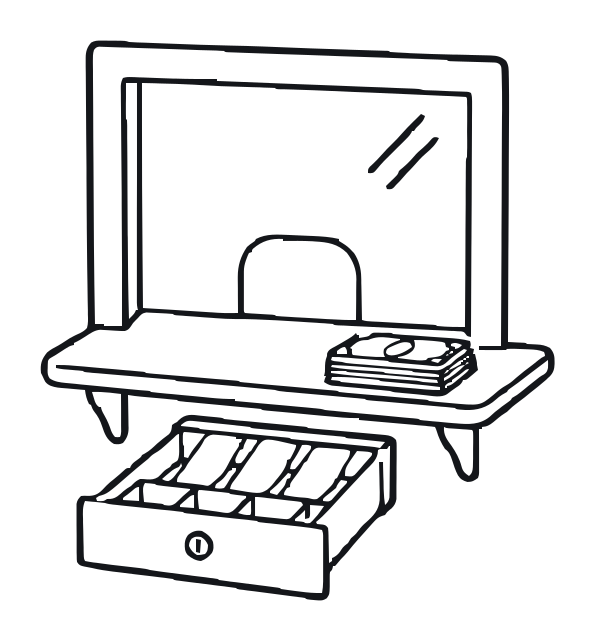
Handles the transactions and the people at a branch counter — and is the bank's face for customers who need a human.

Writes words meant to make a specific person do a specific thing — and is judged on whether they did.

Answers customers who have a problem — and decides, case by case, what the company will do about it.
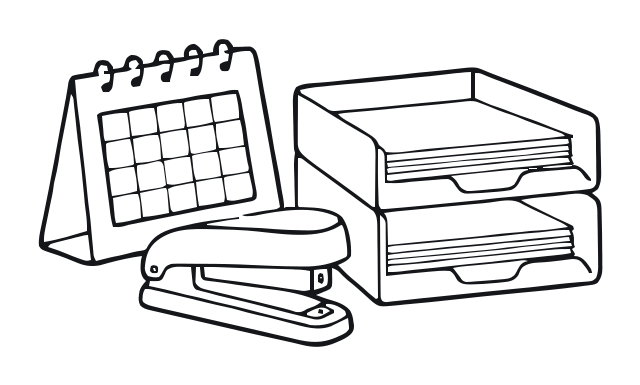
Keeps an office or an executive running: calendars, travel, expenses, documents, and every small thing that would otherwise stop.
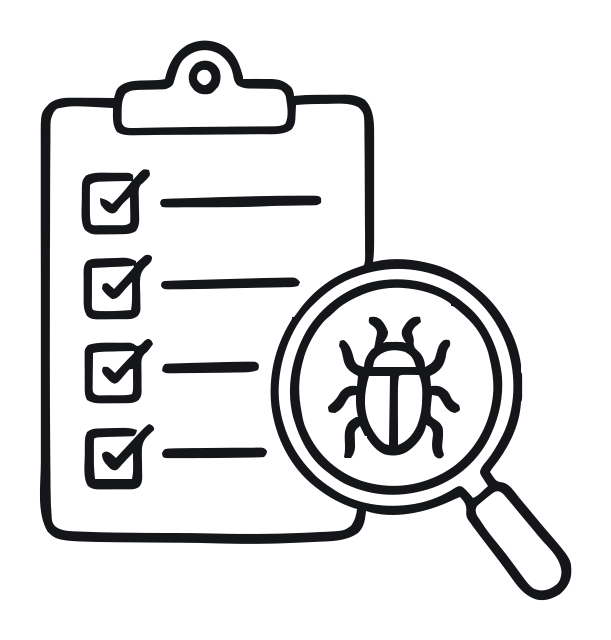
Finds out how the software fails before users do — and is the person who says whether it is ready to ship.
Still studying?
All majors →A major is not one job. Each page breaks down the competencies it actually trains, the several directions they lead, and one thing you can test this term.