 LO
LOThe world is changing. You have more than one option.
Understand how AI, robotics and automation are changing your work and your studies — and find a next step that actually fits your situation.
Every occupation, on one map
Across: reconstructed · platform inferenceEach square is an occupation. Across: how much its work is changing. Up: across all its tasks, whether more are being done faster by people with tools or taken over by machines — the farther from the middle, the more of the job that difference covers.
Across: reconstructed today, looking back — a platform inference, stopping at now. Up: today's task judgements, counted by tasks rather than hours; it does not move with the timeline.
↑ more tasks “being augmented” — people doing them faster with tools · ↓ more tasks “automating” — machines taking them over · counted over all its tasks, so a job technology barely reaches stays near the middle
- Tech & data
- Transport & logistics
- Health & care
- Business & finance
- Creative & media
- Trades, building & farming
- Law, public service & education
- Retail, hospitality & service
- Pale fill: low confidence in the index
The impact index is not a probability of losing a job. Squares in the same band are nudged up or down so each one can be clicked; the horizontal position is exact. Each occupation's index was assessed between 2026-09-09 and 2026-10-07; the date for each one is in its tooltip and on its page.
Where are you standing right now?
The same change reads differently depending on whether you hold the job, are studying for it, employ it, or are building for it.
One task, as it actually reads
Taken straight from the site — one of 825 task judgements across 162 occupations. Every one of them carries what it does not establish, and says whether it rests on a verified record or on our inference.
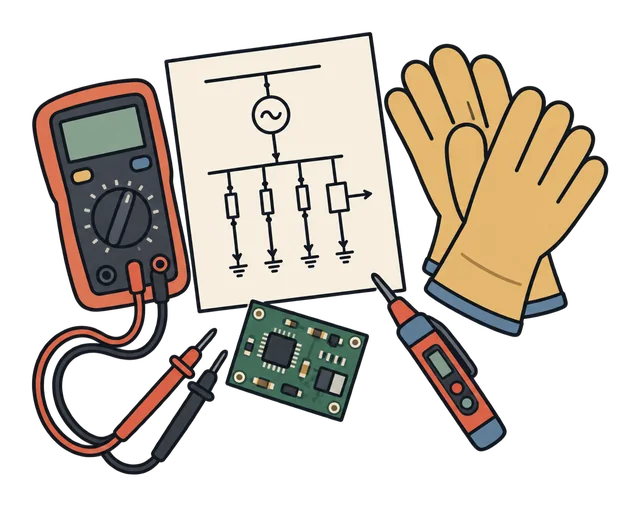
Where the law licenses the role, responsibility sits with a named person: in Singapore the holder of an electrical engineer's licence — a registered professional engineer in electrical engineering — is entitled to design and take full charge and responsibility for any electrical installation, while technicians may design only smaller installations.
There is no single curve
Same period, same method, four occupations. One nearly sextupled, one barely moved, and one came back down. A single number for 'AI and jobs' has to average these together, which is how it stops meaning anything.
- Copywriter12 → 76 · rose the most
- Machine learning engineer34 → 47 · the only one that came back down
- Bricklayer / blocklayer8 → 26 · the middle of the set
- Airline pilot30 → 34 · barely moved
Which four are shown is computed, not chosen — steepest, the one that fell, the median, flattest. How the curve is reconstructed →
Everything above sits on one model
Occupations, tasks, verified records, rules, official codes: each is an object in one ontology, linked to the others and changed only through named actions. This is the whole of it, and every number is counted from it.

AI and people, working together
Pages and views
Agents and automation
Open data and APIs
MCPCSVJSON-LDsits inleads tocoded asclassified asoffersmade ofsupportscitescitesaligns tojudged asreadsbears onapplies infromaboutviaBusiness function13Occupation162Degree18Long-form note8Next step483Official code764Evidence record1,165Task825O*NET activity867Lead1,712Source1,073Judgement825Rule154Jurisdiction25Add an occupation →Map a code →Add evidence →LoopVerify →LoopAlign a task →Accept a lead →LoopChange a judgement →Read a rule →Task object
Treating, vaccinating and operating
- Occupation
- Veterinarian
- Direction
- Still human-led
- Basis
- Evidence-backed
- Verified records
- 1
- O*NET activities
- 3
- Rule
- must not · Singapore
- Assessed
- 2026-09-26
Sources
Logic
Checks and write-back
- Object — this site's judgements, evidence and readings
- Object — public reference: codes, O*NET, laws, sources
- Link
- Action — how the object is changed
- The unattended loop may run this action
- The links the card's task walks
Start with an occupation
All occupations →Each one is broken into its actual tasks — which are automating, which still need a person, and which are new because of automation.
Moves meaning between languages — and decides what to do when the meaning does not move cleanly.
Handles the transactions and the people at a branch counter — and is the bank's face for customers who need a human.
Writes words meant to make a specific person do a specific thing — and is judged on whether they did.
Decides whether a piece of content stays up, against a written rule — the one occupation on this site where the employer is legally obliged to publish how much of that deciding is done without a person.
Answers customers who have a problem — and decides, case by case, what the company will do about it.
Keeps an office or an executive running: calendars, travel, expenses, documents, and every small thing that would otherwise stop.
Finds out how the software fails before users do — and is the person who says whether it is ready to ship.
Keys data from paper forms, scans and documents into systems, checks it against the source, and fixes what does not match. US projections expect this occupation to shrink by about a quarter by 2035, and machines now read much of what used to be keyed — census forms, tax returns, invoices, financial statements. But the machines route what they cannot read with confidence back to people, a large IRS digitisation effort has so far processed only a small share of paper returns, and firms that automate data capture keep people in the loop for exceptions and quality.
Makes visual decisions on someone else's behalf — and defends them.
Does the reading, drafting and organising that lets a lawyer sign off — and is accountable for nothing being missed.
Takes payment, answers questions, restocks shelves and keeps a shop floor working — often all in the same hour.
Turns hours of footage into the minutes someone will actually watch — and decides what the story is in the process.
Questions worth a long answer
All notes →Every section of these cites a verified record or a task judgement, and prints what it rests on directly underneath. A section with no citation fails our build.
How many jobs has AI actually replaced so far?
There is no single number, and the honest reason is not that the data is missing — it is that almost every published figure counts something other than a job. Here is each one we could check, and what it actually counts.
Which parts of my job will AI actually take over, and how can I tell in advance?
Not how hard the task is. Not how well-paid. The property that predicts whether a task moved is whether something other than a human being can say 'that is wrong, try again' — and say it a thousand times overnight without getting tired.
If AI can do most of the work in a skilled job, why does the job still need a person?
Put a dozen skilled occupations side by side and the same shape appears. Machines have taken the parts of the work that produce material — the photographs, the drafts, the scripts, the routine changes — and they are fast at it. What they have not taken is the decision that the material is right, and in most of these jobs the law says that decision belongs to a named, qualified person who signs for it.
How many years do I have before AI takes my job?
We refuse to answer this with a number, and that refusal is enforced by a test that fails the build. This is the argument behind it: every ingredient a year-estimate would need is either unmeasured, reversible, or decided by someone who has not decided yet.
How does AI regulation actually change my job, in practice?
Most writing about AI and work describes technology arriving and jobs changing afterwards. In the verified record the commonest sequence runs the other way: a rule creates a duty, the duty lands on a named role, and somebody's job description grows a paragraph before anything is deployed.
Which parts of a business does AI actually get deployed into first?
Adoption is narrower than the coverage suggests and lands in the same three places. The interesting question is not which function buys the tool — it is which role inherits the work the tool creates, because in the verified record that role is almost never the one that chose it.
When a team automates video production end to end, which tasks disappear and which get more expensive?
Two of the five tasks went away almost completely, and they went first because they were the most specifiable. The two that did not go away got more expensive, because the pipeline multiplies whatever judgement you hold it to. The fifth task did not get automated — it got deleted, along with the person who used to brief it.
If coding agents can read, write, test and fix code, what is left of a software engineer's job?
The typing moved; the job did not disappear. In the one large agent-driven migration with published numbers, the human's messages went mostly to review, testing and CI, to challenging design decisions, and to pushing work to completion. The records around it say why that work does not shrink: faster output is not the same as correct output, and trust in the output is falling as use rises. What has changed most is the door in, not the job inside.
Still studying?
All majors →A major is not one job. Each page breaks down the competencies it actually trains, the several directions they lead, and one thing you can test this term.