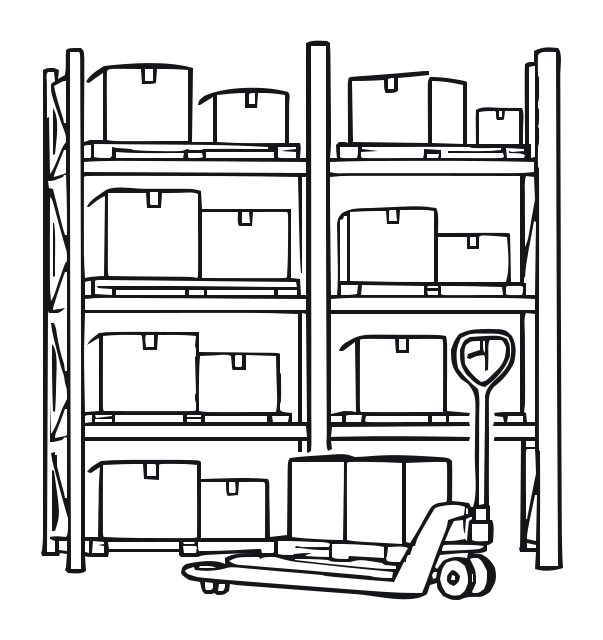
Warehouse worker
Receives, stores, picks and packs the goods that make online ordering work — at a pace set by a system.
This is not a probability of losing your job. It combines how much of the role's task load is exposed to automation with how far adoption has actually gone — useful for comparing occupations on one consistent basis, and for nothing else.
Written for operatives in e-commerce fulfilment centres and distribution warehouses. Cold storage, hazardous goods, small third-party warehouses and forklift-certified roles differ.
What is actually changing#
The unit of analysis is the task, not the job title. A role is not replaced — its task mix shifts.
Moving goods around the building
Automating✓ Evidence-backedWalking or driving pallets, totes and shelves from where they are to where they need to be.
Mobile robots that bring shelves to a picking station, and autonomous forklifts and tuggers, are deployed at scale in large fulfilment centres. The walking — historically the largest share of a picker's shift — is the part that has actually been removed, because moving a known object along a mapped floor is a solved robotics problem.
Picking items and packing orders
Being augmented≈ Platform inferenceTaking the right item out of a bin of mixed things and putting it in the right box, tens of thousands of different items.
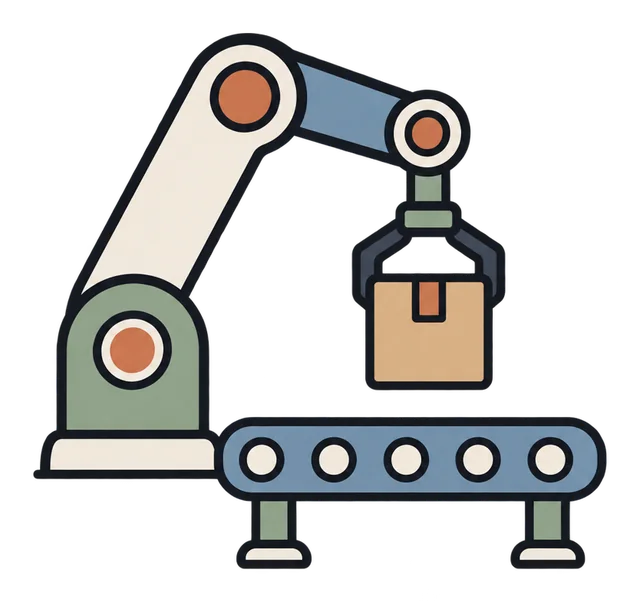
Robotic picking arms work for a subset of items — rigid, regular, well-lit — and are expanding that subset every year, but grasping arbitrary objects from clutter remains the hardest problem in the building. In most facilities the human still picks and the robot brings the shelf; the arm does the easy items and hands the hard ones to a person.
Progress on grasping is real and fast. This is the task on the site most likely to have moved by the next assessment, and we will revise it when deployments, not demonstrations, change.
Handling what the system cannot
Still human-led≈ Platform inferenceDamaged goods, mislabelled bins, a jam in the conveyor, a return that does not match its record.
Automated warehouses generate exceptions constantly, and each one needs a person to diagnose and clear it. The more automated the building, the more the remaining human work is exception handling, which requires understanding how the system works rather than just following its instructions.
Receiving and checking inbound goods
Being augmented≈ Platform inferenceUnloading, counting, checking against the order, spotting the damaged or wrong shipment before it enters stock.
Scanning and vision systems speed the counting and matching, but inbound freight arrives in every possible state of packaging and the decision to accept or reject still needs a person looking at the physical goods. Automation has compressed the paperwork more than the handling.
Operating and maintaining the robot fleet
New task✓ Evidence-backedMonitoring the fleet, recovering stuck robots, swapping batteries, running the first-line maintenance.
Every automated facility has created a tier of technician roles that did not exist before: fewer than the picking roles they replaced, better paid, and usually filled by promoting operatives who understood the floor. This is the concrete form the 'new jobs' argument takes in this occupation.
Which technologies matter here#
Four separate signals. They are deliberately not added together — a job exposed to two technologies is not twice as exposed.

How it got here#
The index is not a static number. This is where it would have sat at each capability checkpoint since ChatGPT — reconstructed, and labelled as such.
● 1 verified event for this occupation, plotted at the date it happened — the parts of the line near a marker are anchored to something checkable.
A slow climb from a high base, and the reason is the opposite of the office occupations: goods-to-person robotics was already deployed at scale in 2022, and language models are almost irrelevant here. What moves this curve is robotic grasping, which improves steadily and is the single task on this site most likely to have moved by the next assessment.
A flat line is not a forecast of safety. It says which tasks automation has reached so far — the occupations that moved least here are the ones where the constraint is physical or regulatory, and both of those can change.
Recent changes#
Amazon's global fulfilment network; company-reported. The robot count is fleet size, not a statement about total headcount.
An employer has put it into production. Can move the baseline — weighted by scale and how similar the setting is.
Amazon — About Amazon ↗What this means for you#
Warehouse work is still hiring at scale and still does not require credentials, but the job you are entering is different from the one described a decade ago: less walking, more standing at a station at a pace the system sets, and more exception handling. Treat it as a way in, learn how the automation actually works while you are there, and aim at the technician and team-lead roles that automated buildings create.
Your understanding of how the floor actually works is the qualification for the technician and supervisory roles that automation creates, and operators who move into them early tend to do well. Picking itself is the task most likely to change further, so if that is all your role is, move before the next generation of arms arrives rather than after.
Your options#
Four directions, each with its real constraints and one thing you can test this week. Continuing as you are is a legitimate choice — it just has to be a chosen one.

Become the person who fixes the robots
Automated buildings need technicians and fleet operators, pay them more than pickers, and prefer people who already know the floor.
Usually requires an internal training programme or a short technical certificate, and the number of these roles is a fraction of the picking roles.
Ask who recovers stuck robots on your shift and how they got that job. If there is a programme, ask to be put on the list this week.

Move up to team lead and shift operations
Someone has to run the shift, manage the exceptions and the people, and answer for the numbers. That work grows as the floor automates.
Performance-metric culture is intense in this industry, and leads are squeezed between the system's targets and the people.
Ask your team lead what the three hardest parts of their week are. Decide whether you would rather have those problems than your current ones.

Skilled trades adjacent to the building
Electricians, maintenance fitters and refrigeration technicians are in shortage and every automated facility needs them on site. The apprenticeship pays, and the skill outlasts any one employer.
Multi-year training with lower pay at the start, and it is a different daily life from the warehouse floor.
Talk to the maintenance contractor next time they are on site. Ask how they trained and what they earn.
Common questions#
They have taken the walking and much of the moving, and they are steadily taking more of the picking. They have not taken the exception handling, the inbound checking or the work of keeping the robots themselves running, and those roles have grown as the buildings automated. The honest picture is fewer people per parcel, each doing work that needs more understanding of the system, with the remaining picking task the one most likely to change next. If you work in a warehouse, the question is not whether to leave but which of the newer roles to move towards.
Method and sources#
- Assessment date
- 2026-09-10
- Basis of the task judgements
- 2 evidence-backed · 3 platform inference · 0 not enough evidence
- Verified events
- 1