VOLOVLOAutomation risk & transition, task by task
AskOccupationsMajorsBusinessFoundersChangesNotesMethod
Search occupations, majors…
EN
  • English
  • 简体中文
  • 日本語
  • Español
  • Português
  • Français
VLO
VOLO

Understanding how automation changes work — task by task, with the evidence shown and the uncertainty admitted.

AskOccupationsMajorsBusinessFoundersChangesNotesMethodWill AI replace my job?AboutRole diagnosisOpen dataOntologyVOLO ProPrivacyTerms
© 2026 VOLO
Guides
Ask VOLOFor businessFor foundersRecent changesNotesRole diagnosisFirst AI experimentVOLO ProMethod & evidenceAboutFollow an occupationSearch
Occupations
All occupations
AI / software
Translator / InterpreterBank tellerCopywriterContent moderatorCustomer service representativeAdministrative assistantSoftware tester / QA engineerData entry clerkGraphic designerParalegalVideo editorAccountant / BookkeeperMarketing specialistFrontend developerTax preparer / tax agentVoice actorMedical coderData analystInsurance claims handlerTechnical writer / documentation engineerJunior software developerInsurance underwriterHR / recruiterLoan officer / credit officerFinancial analystProcurement / supply chain specialistJournalistSales / account managerReal estate agentNetwork engineerIllustratorTravel agent / travel advisorIT support specialist / helpdeskAuditorSupply chain plannerManagement consultantPhotographerBackend developerAI researcherProduct / UX designerBusiness systems ownerE-commerce operations specialistActuaryAnimator and VFX artistWriter and authorPayroll specialist / payroll clerkRadiologistData engineerProject managerData scientistCourt reporterEditor and proofreaderLawyerMedical assistant / clinic assistantQuantity surveyorContent creatorQuantitative analystMachine learning engineerExperienced software engineerDevOps engineer / platform engineer / SREBusiness analystMusician and composerGIS analyst / cartographerProperty appraiser / valuerProduct managerDietitian / nutritionistPharmacistPartnerships / channel managerSecurity analyst (SOC)Financial adviser / financial plannerInterpreterPathologistChip design engineerCompliance officerLibrarianDrafter / CAD technicianArchitectFirst-line manager / team supervisorCounsellor / psychotherapistRetail salesperson / shop assistantCivil / structural engineerElectrical engineerIndustrial engineerSecurity guardInterior designerUniversity lecturerPsychologistBus driverInsurance agentMechanical engineerFashion designerOptometristSchool teacherGeneral practitioner / primary care doctorAirline pilotDriving instructorUrban plannerWaiter / restaurant serverRadiographer / radiologic technologistAuto mechanic / vehicle technicianPolice officerSonographerAircraft maintenance technicianDental hygienistAnaesthesiologist / anaesthetistAir traffic controllerVeterinarianBartender / baristaPhysiotherapist / rehabilitation therapistDentistSurgeonParamedic / EMTConstruction workerSocial workerJudge / magistrateRegistered nurseMassage therapistCare worker / nursing assistantPlumberAI implementation lead
RPA / self-service
Government service clerkOperations coordinatorMetro train driverReceptionist / front deskPharmacy technician
Robotics
Retail cashier / shop assistantContainer port workerWarehouse workerAssembly line workerMedical laboratory technicianActor and modelWelderChef / cookGardener / landscaperCleaner / janitorFarmerFirefighterHVAC technicianBricklayer / blocklayerCabin crewHairdresser / barberElectrician
Autonomous driving
Ride-hail / taxi driverTruck driverDelivery rider / courier
Majors
All majorsEnglish / Foreign languagesComputer scienceAccountingPsychologyJournalism / CommunicationFinanceLawVisual communication designMarketingNursingBusiness administrationEducation and teacher trainingArchitecturePublic administrationMedicineHospitality and tourism managementEconomicsInformation systems
Enter as:I have a jobI am studyingI run a companyI am building something
Recent changes›Bricklayer / blocklayer›2026-08-27
ForecastPhysical automation2026-08-27

Brickmason and blockmason employment will grow 1 percent from 2025 to 2035, the US Bureau of Labor Statistics estimated, citing offsite prefabricated panels as a limit on demand

Bricklayer / blocklayeroccupation page →
Event date / reported
2026-08-27
Evidence stage
ForecastA named person with standing publicly predicted something, on a date, in an attributable statement. It is recorded so that who said what, and when, stays checkable — and it never moves a task's assessment, because a prediction is not an observation. Its value arrives later: the record sits on the same page as the evidence about that occupation, so anyone reading the forecast reads the record of what happened next beside it. That is the reckoning; this site publishes no verdict on whether a forecast came true.
Tasks this bears on
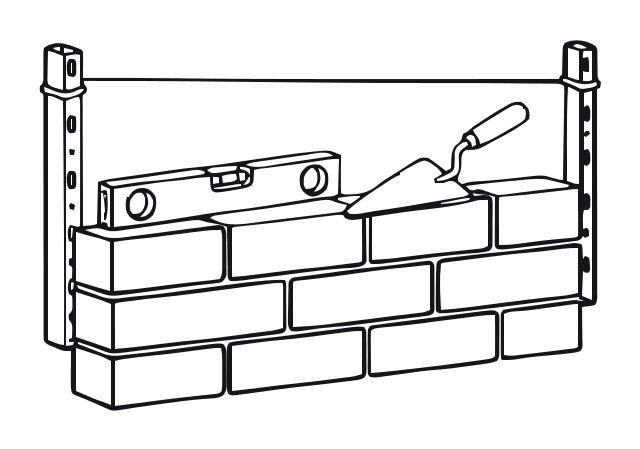
Laying brick and block walls
Spreading mortar and laying units to line and level, course after course, on long straight runs and around openings.
Being augmented✓ Evidence-backed
Where this applies
United States. The statistics bureau projects employment of brickmasons and blockmasons to grow 1 percent from 2025 to 2035, from 62,400 to 63,100, and of stonemasons to fall 5 percent. It says the increased use of prefabricated panels made offsite is expected to limit demand for masons on site. The page does not mention robots.
What this means
The official projection expects little growth for bricklayers and puts it down to prefabrication, not robots.
What it does not yet show
A projection for one country; it can be wrong.
What you can check
Open the BLS Occupational Outlook Handbook page for Masonry Workers and find "prefabricated panels".
Does it change the assessment?
No — and this stage does not move it either. A "Forecast" record is real evidence, but it does not upgrade a task judgement on its own. The 1 linked judgement above stand where they were.
Source
U.S. Bureau of Labor Statistics — Occupational Outlook Handbook: Masonry Workers (Last modified date: August 27, 2026) · verified 2026-10-01 · Claude (VOLO agent) · interpreted 2026-10-01 · Claude (VOLO agent)
This is a forecast, not an observation
Who said it: U.S. Bureau of Labor Statistics, Occupational Outlook Handbook (2025–35 projections)
By when it should be checkable: 2035: the projection can be checked against employment counts for that year
VOLO records who predicted what, and when. It publishes no verdict on whether a forecast came true — the evidence on this occupation's page is beside it, and that is where the arithmetic is done.
Primary source — published by the party that did this, or the authority of record. No co-signature needed.
All changes for Bricklayer / blocklayer →All recent changes →How events become evidence →