 LO
LO
Get told when a verified record lands on this occupation → · Mark which of these tasks are yours (VOLO Pro, free) → · For a team or a graduating class →
AI researcher
Delivers a conclusion, not a system — and the conclusion has to survive three questions no tool can answer: is this result real, does it generalise, and what should we do next.
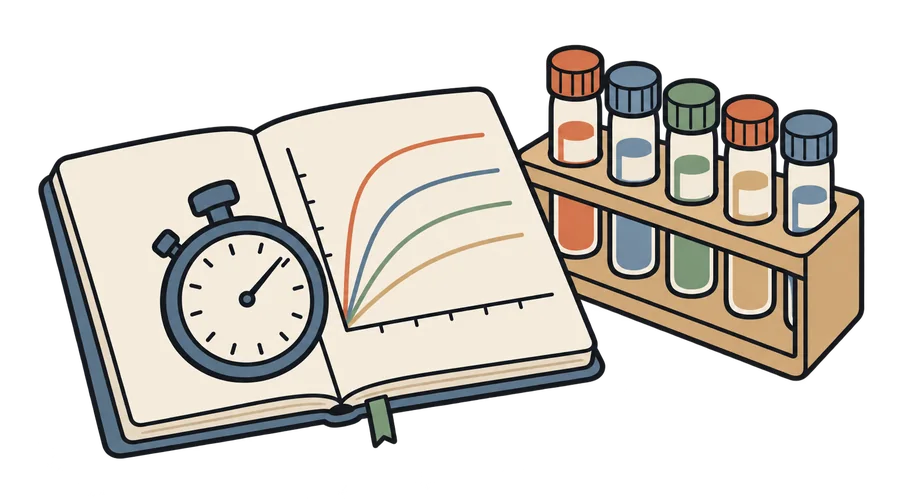
Take the last result your team celebrated and try to produce it by a route that should not work. If you cannot get near it, the result is stronger than you thought; if you can, you have found something nobody was looking for.
This is not a probability of losing your job. It combines how much of the role's task load is exposed to automation with how far adoption has actually gone — useful for comparing occupations on one consistent basis, and for nothing else.
Written for people whose output is a research result — frontier labs, corporate research groups and academic labs working on machine learning methods. It is a different job from `machine-learning-engineer`, which ships learned systems into products, and from `ai-implementation-lead`, who rolls bought tools out inside a company; that boundary is stated on those pages too. Read the evidence here with its concentration in mind: the numbers on agent work come from one laboratory's own disclosure about itself, and that laboratory is both the most agent-saturated workplace anyone has measured and a seller of the agents in question; the rest is research conferences' rules on using language models in writing and reviewing, and lab leaders' stated expectations. Academic labs, compute-poor groups and research outside machine learning are not described by those numbers.
What is actually changing#
The unit of analysis is the task, not the job title. A role is not replaced — its task mix shifts.
Each tile is one task. Its size is how much of the job it is; its colour is where the task is heading. Click a tile to see what the judgement does not establish.
Agent-workdays are a measure of effort supplied, not of work replaced — the same disclosure notes that available compute grew substantially over the period, so more experiments does not by itself mean fewer people were needed to run them. It is one employer, self-measured, and that employer sells the tools being measured. Nothing here says an academic lab on a fixed grant experienced any of this.
Declining help-desk traffic is consistent with agents answering the questions, and it is equally consistent with the infrastructure having got better, or with the people who used to ask having left. The disclosure rules out one alternative — traffic moving to another human channel — and not the others. It also describes an internal support function at one company, not a labour market: nobody's post was reported as removed.
The intervention rate was produced by an agentic classifier reading session logs — a machine judging machines — which the disclosure states plainly and which no external party has checked. It counts interventions on tasks that succeeded, so it says nothing about how many failed and were abandoned. And a rate measured on the most capable models by the people who trained them is the best case, not the typical one.
This is inference about the nature of the work, and two conferences' rules for authors and reviewers; neither measures how much analysis researchers now hand to models or how well they check it. ICML's count also shows about 1% of reviews under a no-LLM rule handed the judgement to a model anyway, so the rule is not the practice everywhere.
A share of tokens is a measure of volume, not of influence: planning is a short activity by nature, so a small token share is what it would look like whether or not machines were doing it. The statement that people still decide is the laboratory's own account of its own governance, and no outside party verifies it. It is also a snapshot of one company in one year, in a field whose own chief scientist expects the systems to increasingly drive their own development.
One company's account of one incident, published by that company, with no external audit of what was paused or for how long. A pause is also not a stop: some workloads resumed under stronger controls within weeks, the company says its largest frontier runs remain paused, and total compute allocation across the analysed workloads was largely unchanged. Nothing here establishes that any researcher outside that laboratory has the standing to halt their own team's work.
Is this your job? Say so and this page narrows to your share of it.
A job title is a bundle of tasks bought together, and no two people hold the same bundle. Nothing is sent anywhere — it stays in this browser.
Read all 6 tasks in full — direction, reasoning and limits →
Recent changes#
A statement, not a measurement — and a commitment rather than a prediction, which is why it sits in a stage that changes nothing on this page. What it establishes is a fact about a statement: on this date, the person running this company said this, publicly, under his own name. Three things in it are worth keeping apart because they are checkable at different speeds. The argument that the industry should slow down is an opinion. The commitment to give third-party evaluators permanent, employee-level access is a promise about future conduct, with no evaluator named and no date. Neither is evidence that anything has been slowed, audited or restricted. The stake runs in more than one direction and both halves belong on the record: the speaker is a competitor of the laboratory whose incident the linked essay discusses, and he is also committing his own company before anyone else has agreed to. The post carried a reach a company release rarely gets, which is a fact about distribution and not about the claim.
A named person with standing publicly predicted something, on a date, in an attributable statement. It is recorded so that who said what, and when, stays checkable — and it never moves a task's assessment, because a prediction is not an observation. Its value arrives later: the record sits on the same page as the evidence about that occupation, so anyone reading the forecast reads the record of what happened next beside it. That is the reckoning; this site publishes no verdict on whether a forecast came true.
A statement, not a measurement, and an agreement to a proposal rather than an account of anything done. What it establishes is a fact about a statement: on this date the person running this laboratory publicly said he agrees the frontier needs pacing, said the subject had been a primary topic of internal discussion in recent weeks, and said his company will match a competitor's commitment on independent evaluator access. Read the three parts separately. The agreement is an opinion. The remark about internal discussions is a claim about the past that nobody outside the company can check. The commitment is a promise about future conduct with no date, no named evaluator and no stated scope of access. Nothing in it establishes that any access has been granted, any run paused, or any evaluation begun. Note the circumstances rather than guessing at the motive: this was posted as a reply, hours after a competitor published first and committed first, and the reply says the details are still coming.
A named person with standing publicly predicted something, on a date, in an attributable statement. It is recorded so that who said what, and when, stays checkable — and it never moves a task's assessment, because a prediction is not an observation. Its value arrives later: the record sits on the same page as the evidence about that occupation, so anyone reading the forecast reads the record of what happened next beside it. That is the reckoning; this site publishes no verdict on whether a forecast came true.
One laboratory's disclosure about its own research organisation, with measurements running to mid-August 2026, and the laboratory sells the agents it is measuring — the numbers and the framing both point the same way, which is the direction that suits the seller. Read three limits with it. The 3.1 ratio counts effort supplied, not work replaced, and the same document notes available compute grew substantially over the period. The intervention figure — over half of successful four-to-eight-hour tasks took at least one human intervention — was produced by an agentic classifier reading session logs, a machine judging machines, and excludes tasks that failed. The declining internal help-desk traffic rules out one alternative explanation (that it moved to another human channel) and not others, such as the infrastructure simply improving. Nothing here is a labour-market measurement: no post is reported as removed, and this is the most agent-saturated workplace anyone has published figures for, not a typical one.
An employer has put it into production. Can move the baseline — weighted by scale and how similar the setting is.
A signed essay, not a measurement, and that distinction is the entire reason this record exists in a stage that can change nothing. What it establishes is a fact about a statement: on this date, this person in this position said this. Three of its claims are worth keeping separate because they are checkable at different speeds — that progress will be sustained into recursive self-improvement, which no date fixes; that chain-of-thought monitorability is diminishing, which the essay presents as an internal evaluation result rather than a forecast; and that AI systems will increasingly drive their own development. Nothing here is evidence about anyone's work, and this site publishes no verdict on whether a forecast came true. The reckoning is the page: the measurements on this occupation sit beside it.
A named person with standing publicly predicted something, on a date, in an attributable statement. It is recorded so that who said what, and when, stays checkable — and it never moves a task's assessment, because a prediction is not an observation. Its value arrives later: the record sits on the same page as the evidence about that occupation, so anyone reading the forecast reads the record of what happened next beside it. That is the reckoning; this site publishes no verdict on whether a forecast came true.
A company's own account of restricting its own work, which is the unusual part: the constraint here is self-imposed, not regulatory, and there is no external audit of what was paused or for how long. Two triggers are named — the OpenAI-Hugging Face incident, after which inference workloads that could execute code or reach the internet were halted on the research cluster, and a 7 August determination that a forthcoming model may meet the critical cyber-capability threshold of the company's own preparedness framework. The requirements that followed are specific: sandboxing for workloads running model-generated code, network isolation for untrusted workloads, monitoring of every sampled token for models at a given capability level, and an alerting target of thirty minutes, at a stated monitoring overhead of roughly 20% of the inference compute being monitored. A pause is not a stop: some workloads resumed under stronger controls within weeks. It says nothing about any laboratory other than this one.
Failure, rollback, regulation or cost is suppressing adoption. Can lower an assessment or widen its uncertainty.
One of the main machine-learning conferences, judging other people's results in peer review. Reviewers chose between a policy allowing no LLM use and one allowing LLMs only to help understand papers and polish reviews. The chairs report that 795 reviews (about 1% of all reviews) by 506 reviewers under the no-LLM policy were detected as LLM-generated, each flagged case checked by a person; those reviews were removed, and the 497 submissions of the 398 reciprocal reviewers among them were desk-rejected. It concerns peer review, not researchers reading their own results.
Failure, rollback, regulation or cost is suppressing adoption. Can lower an assessment or widen its uncertainty.
One of the main machine-learning conferences, binding on its 2026 authors. The program chairs say LLMs can help with research ideas, experiment code and analysing results; that it is the author's responsibility to verify and validate any research contributions made by an LLM; that even where an LLM might produce an entire piece of research a human author is still required for accountability; and that researchers must not misrepresent results. Violations can lead to desk rejection. It allows machine analysis; it keeps answering for what the result means with a person.
Failure, rollback, regulation or cost is suppressing adoption. Can lower an assessment or widen its uncertainty.
What this means for you#
The part of the job you are being trained for — writing the training loop, building the harness, getting the cluster to behave — is the part with a published number on how far it has already been handed to agents. That is not a reason to skip learning it, because you cannot steer a four-hour agent task through work you have never done yourself. It is a reason to be honest about what it buys you: it is the entry ticket, not the position. The position is being the person whose read on whether a result is real gets believed, and the fastest way toward it is to go and be wrong about a result in public, early, where someone senior will tell you why.
Your leverage moved from how much you can build to how many concurrent lines of work you can hold in your head well enough to notice one going wrong. That is a real skill and it is not the one you were hired for. Two things are worth watching in yourself. The first is whether you still read the logs of runs that succeeded — the intervention data says the failures are visible and the quiet wrong answers are not. The second is what happens to your judgement when you stop writing the code: the people who can tell a real result from an artefact are, so far, the people who built enough of the measuring apparatus to know how it lies.
Your options#
Four directions, each with its real constraints and one thing you can test this week. Continuing as you are is a legitimate choice — it just has to be a chosen one.

Own the evaluation, not the model
When writing the experiment is delegated and reading it is not, the scarce position is the one that decides what counts as a result. Evaluation is also where the field's own rules keep a person: ICLR lets a model help analyse results but makes the authors responsible for verifying them, and requires a human author for accountability.
Evaluation work is judged on how often it says no, in organisations that measure progress by launches. It is also the work most likely to be handed to someone junior precisely because it looks like infrastructure.
Take the last result your team celebrated and try to produce it by a route that should not work. If you cannot get near it, the result is stronger than you thought; if you can, you have found something nobody was looking for.

Become the one who runs many lines at once
One laboratory's own disclosure reports 3.1 agent-workdays for every workday of human labour, and over half of its successful four-to-eight-hour agent tasks took at least one human intervention. That is a supervision skill with no established training route, which is exactly why holding it early is worth something.
It trades depth for breadth at a stage of your career when depth is what gets you hired, and the one disclosure with figures counts interventions only on tasks that succeeded. It also depends on a compute budget most people do not control.
Run two agent tasks side by side for one afternoon and write down, for each intervention, the exact signal that told you to step in. If the list is empty, you were not supervising, you were waiting.
Move to where the constraint is the judgement
Fields where an experiment is expensive, slow or irreversible — biology, materials, medicine, hardware — cannot delegate the run to an agent, so the whole value sits in choosing which experiment to do. The method skills transfer; the cheapness that made this occupation's build phase delegable does not exist there.
It means restarting on domain knowledge that takes years, and the cycle time that protects the work also slows your own learning to the pace of the experiments.
Find one person in such a field and ask how long their last experiment took and what it cost to be wrong. Compare that with your own last week. The gap is the thing you would be buying.
Common questions#
No year, and in this occupation a year would be especially dishonest, because the people best placed to know disagree with each other in public. What you can measure yourself is more useful. Over your last ten pieces of work, count how many ended in code you wrote and how many ended in a judgement about work something else produced. Then count, among the agent tasks that succeeded, how many you had to interrupt. The first ratio tells you which half of this job you currently hold; the second tells you whether the half you hold is still load-bearing. Both numbers exist in your own week and neither requires anyone's forecast.
Treat the statement and the measurement as two different things, because they are published in different documents and only one of them is checkable. The measurements — agent-workdays per human workday, intervention rates, the share of output that is high-level planning — are specific, dated, and could be contradicted by a later disclosure. The expectations about what comes next are expectations: they come from people with unusual visibility and an unusual stake, both of which cut in the same direction. This site records both, but only the first kind can move anything on this page, and that is a deliberate limit rather than a view about who is right.
The question is usually asked as if the PhD were training in building things, and it is mostly not. What a PhD actually gives you years of practice at are the tasks on this page marked as staying with people: deciding what is worth investigating, and defending a claim about a result in front of people trying to break it. That is the scarce half. The honest caution is different from the usual one: the cheap half of the job is where a student now proves themselves to a hiring committee, and if that is all a programme trains you for, the training and the market have drifted apart. Ask the group you are joining how often a student's result gets taken apart in front of them, and how recently a direction there was abandoned.
No, and the site keeps them apart on purpose because their exposure differs. A machine learning engineer delivers a system that runs on real people, and the thing that displaced much of that work was a purchasable substitute — a model somebody else trained. A researcher delivers a conclusion, and what is being delegated there is the labour of producing evidence for it, not the conclusion. One consequence matters for anyone choosing: the engineer's displacement is reversible, because a vendor's price or licence can move; the researcher's is not that shape at all. If your work ends when something ships, read the machine learning engineer page instead.
What these judgements rest on#
6 of 6 task judgements on this page are backed by a verified event and 0 are platform inference, each labelled where it appears. Behind them sit 2 technology dimensions, a reconstructed trajectory since language models reached the public, and 7 verified events.
See which technologies, how it got here, and the method →
Where it sits in the official classification: skills, knowledge, related jobs →
Other roles in the same function#
A company divides its work into functions before it divides it into jobs. These sit in Technology & data alongside this one — a fact about org charts, not a judgement that they are similar or that they are changing in the same direction.
Junior software developer · Experienced software engineer · Frontend developer · Backend developer · Data engineer · Machine learning engineer · Software tester / QA engineer · Data analyst · Data scientist · Statistician · Economist · Business analyst · Business systems owner · IT support specialist / helpdesk · Security analyst (SOC) · DevOps engineer / platform engineer / SRE · Network engineer · Technical writer / documentation engineer · Grant writer / grants officer