 LO
LO
Get told when a verified record lands on this occupation → · Mark which of these tasks are yours (VOLO Pro, free during the launch) →
Midwife
Cares for women through pregnancy, labour and the weeks after birth: antenatal checks and risk assessment, monitoring the baby's heart rate in labour, attending births and emergencies, and postnatal and newborn care. Computer reading of fetal heart traces has been tested at scale and found wanting in labour: in a UK trial of 47,062 women it did not improve outcomes, England's guideline body said one-to-one care should not be replaced by automated interpretation, and NHS England now requires an hourly second-person review. Before labour, England recommends computerised analysis of the trace. Home blood-pressure monitoring did not detect high blood pressure sooner in a large trial. The US projects 11% growth for nurse-midwives.
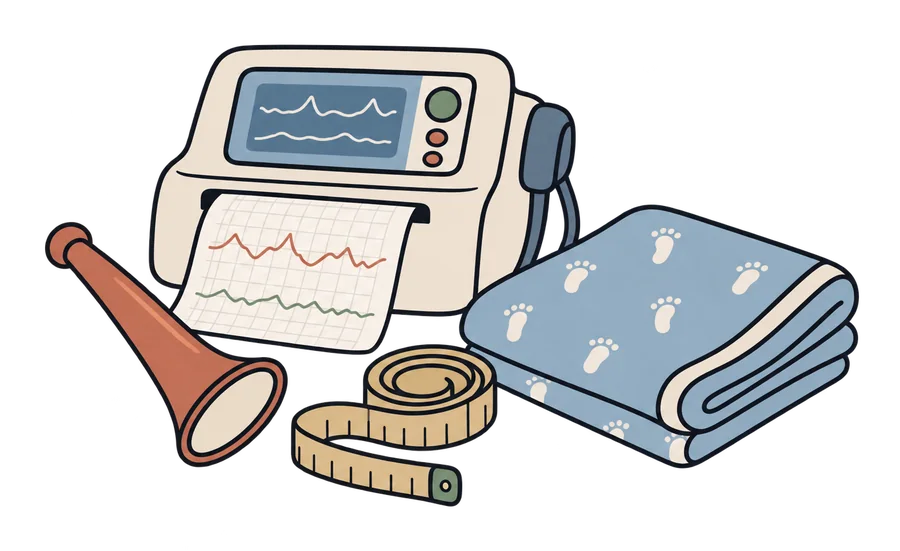
Find out who leads fetal monitoring training in your unit and what the next competency assessment covers.
This is not a probability of losing your job. It combines how much of the role's task load is exposed to automation with how far adoption has actually gone — useful for comparing occupations on one consistent basis, and for nothing else.
Written for midwives, including registered midwives in the UK, Europe, Australia and Japan and certified nurse-midwives in the US; obstetricians and registered nurses are different jobs, and nurses have their own page. The evidence is a US labour projection, two UK trials, England's guideline review on computerised fetal heart trace interpretation and NHS England's national maternity care bundle; it establishes what computerised monitoring and home monitoring have and have not done, mostly in England, not how midwives' numbers or workload have changed.
What is actually changing#
The unit of analysis is the task, not the job title. A role is not replaced — its task mix shifts.
Each tile is one task. Its size is how much of the job it is; its colour is where the task is heading. Click a tile to see what the judgement does not establish.
A national recommendation and one trial in England; they do not measure how antenatal visits or midwives' time have changed.
One generation of software in the UK; newer systems are cleared elsewhere as aids, and no trial of them has yet shown better outcomes.
The absence of a record; it does not rule out devices that change how emergencies are handled.
Inferred without a record on this page; it does not show any change in hands-on postnatal care.
Is this your job? Say so and this page narrows to your share of it.
A job title is a bundle of tasks bought together, and no two people hold the same bundle. Nothing is sent anywhere — it stays in this browser.
Read all 4 tasks in full — direction, reasoning and limits →
Recent changes#
United States. The statistics bureau projects nurse-midwives to grow from 8,200 to 9,100 between 2025 and 2035, 11 percent. For the group it names rising demand for healthcare from an ageing population and chronic disease, and its occupational factors table says nurse-midwives are increasingly taking on tasks previously performed by obstetricians and gynecologists. It names no automation factor. A small occupation; most midwives in other countries are not nurse-midwives.
A named person with standing publicly predicted something, on a date, in an attributable statement. It is recorded so that who said what, and when, stays checkable — and it never moves a task's assessment, because a prediction is not an observation. Its value arrives later: the record sits on the same page as the evidence about that occupation, so anyone reading the forecast reads the record of what happened next beside it. That is the reckoning; this site publishes no verdict on whether a forecast came true.
England. The national maternity care bundle requires all staff who care for women in labour to undertake annual training and competency assessment in fetal monitoring, says a buddy review should be undertaken at least hourly when a trace is used, and asks units to name dedicated lead midwives and obstetricians for fetal monitoring. Before labour, after reduced fetal movements, it says computerised traces are recommended over visual reading because they may reduce human error. More human review in labour, more software before it.
Regulation, subsidy or public procurement is requiring or funding adoption — the mirror of a constraint. It shows adoption is being required, not that it has happened, so one mandate is never enough on its own; two independent ones are.
England, 15 hospital maternity units. 2,441 pregnant individuals at higher risk of pre-eclampsia were randomised to blood-pressure self-monitoring with telemonitoring or usual care; the time to clinic-recorded hypertension was not significantly different, and the authors conclude self-monitoring did not lead to earlier clinic-based detection of hypertension. A trial of home monitoring alongside, not instead of, antenatal visits.
Small-scale trial in a real setting. Tells us the deployment conditions are being tested, not that they hold — so one pilot is never enough on its own; two independent ones are.
United Kingdom and Ireland, 24 labour wards that used the decision-support software. 47,062 women having continuous electronic fetal monitoring were randomly assigned to decision support or none; poor neonatal outcome occurred in 0.7 percent of babies in both groups, and the authors conclude computerised interpretation does not improve clinical outcomes for mothers or babies. Clinicians still read the trace; the software advised them.
Small-scale trial in a real setting. Tells us the deployment conditions are being tested, not that they hold — so one pilot is never enough on its own; two independent ones are.
England. Reviewing evidence on computerised interpretation of fetal heart traces in labour, the guideline committee says one-to-one care should not be replaced by automated interpretation alone, that such software could be over-sensitive and prompt inappropriate responses to alarms, and that in the absence of evidence of clinical and cost effectiveness it would make no recommendation on the technology. The current guideline (NG229) still contains no recommendation for such software.
Failure, rollback, regulation or cost is suppressing adoption. Can lower an assessment or widen its uncertainty.
What this means for you#
If you are starting out, expect computerised analysis of heart traces before labour, electronic records and more structured double-checks in labour. Build what stays with you: reading a labour trace with judgement, hands-on birth skills and emergency drills.
Expect more structured review and documentation around fetal monitoring rather than less. Interpreting labour and deciding when to escalate stay with you.
Your options#
Four directions, each with its real constraints and one thing you can test this week. Continuing as you are is a legitimate choice — it just has to be a chosen one.

Stay in labour care and build fetal monitoring expertise
Computer interpretation did not improve labour outcomes in a large trial, and NHS England asks for dedicated fetal monitoring lead midwives and more human review.
Labour ward work means shifts and high-pressure decisions.
Find out who leads fetal monitoring training in your unit and what the next competency assessment covers.
Learn computerised antenatal analysis and its limits
NHS England recommends computerised analysis of the trace before labour, so midwives need to know what the criteria mean and when to override them.
Systems differ between units, and the recommendation applies in England.
Check whether your unit uses computerised antenatal trace analysis and what its local guideline says about overriding it.
Move into community and continuity-of-care roles
Home monitoring did not take over antenatal checks in a large trial, so care in the community still depends on midwives seeing women.
Community roles involve travel and on-call work, and are organised differently in each country.
Ask what community or continuity-of-care midwife posts exist in your area and what experience they ask for.
Common questions#
Not on present evidence. Computer reading of fetal heart traces did not improve outcomes in a large UK trial, England's guideline body said it should not replace one-to-one care, and the US projects growth for nurse-midwives.
We do not answer that with a number of years. Watch whether a trial of newer fetal monitoring software shows better outcomes in labour, and whether guidelines then change. Those tell you more than any date.
In labour, the evidence says no improvement. The INFANT trial of 47,062 women found computerised decision support did not improve outcomes, and England's guideline review found automated interpretation no better than human interpretation. Before labour, England recommends computerised analysis.
Not on the evidence of a large trial. In BUMP 1, 2,441 higher-risk pregnant women who monitored their blood pressure at home were not diagnosed with high blood pressure any sooner than those checked in clinic.
What these judgements rest on#
2 of 4 task judgements on this page are backed by a verified event and 2 are platform inference, each labelled where it appears. Behind them sit 3 technology dimensions, a reconstructed trajectory since language models reached the public, and 5 verified events.
See which technologies, how it got here, and the method →
Where it sits in the official classification: skills, knowledge, related jobs →
Other roles in the same function#
A company divides its work into functions before it divides it into jobs. These sit in Core delivery (industry-specific) alongside this one — a fact about org charts, not a judgement that they are similar or that they are changing in the same direction.
Content moderator · Registered nurse · Radiologist · Pathologist · Radiographer / radiologic technologist · General practitioner / primary care doctor · Surgeon · Anaesthesiologist / anaesthetist · Respiratory therapist · Optometrist · Care worker / nursing assistant · Counsellor / psychotherapist · Psychologist · Dietitian / nutritionist · Pharmacist · Pharmacy technician · School teacher · Driving instructor · University lecturer · Chef / cook · Electrician · Plumber · HVAC technician · Architect · Building inspector · Drafter / CAD technician · Interior designer · Civil / structural engineer · Land surveyor · Urban planner · GIS analyst / cartographer · Electrical engineer · Chip design engineer · Mechanical engineer · Industrial engineer · Quantity surveyor · Journalist · Editor and proofreader · Translator / Interpreter · Interpreter · Retail cashier / shop assistant · Bank teller · Medical assistant / clinic assistant · Waiter / restaurant server · Bartender / barista · Hairdresser / barber · Construction worker · Bricklayer / blocklayer · Carpenter / joiner · Auto mechanic / vehicle technician · Medical laboratory technician · Physiotherapist / rehabilitation therapist · Speech-language pathologist / speech and language therapist · Occupational therapist · Phlebotomist · Massage therapist · Firefighter · Paramedic / EMT · Police officer · Emergency dispatcher · Farmer · Gardener / landscaper · Social worker · Dentist · Dental hygienist · Veterinarian · Librarian · Welder · Machinist / CNC machinist · Sonographer