 LO
LO
Get told when a verified record lands on this occupation → · Mark which of these tasks are yours (VOLO Pro, free during the launch) →
Respiratory therapist
Sets up and manages ventilators and weans patients off them, gives breathing treatments, keeps airways clear, measures blood gases and lung function, and supports people with chronic lung disease and home ventilation. Ventilators that adjust themselves and run weaning steps automatically are well studied: a 2025 review of 62 trials found they probably shorten ventilation by about a quarter, but the largest single trial found no gain in ventilator-free days, and clinicians still set the targets, watch the alarms and decide. Home ventilation is moving to remote monitoring, with algorithms raising alerts and people acting on them. The US projects 9% growth to 2035 because the population is ageing.
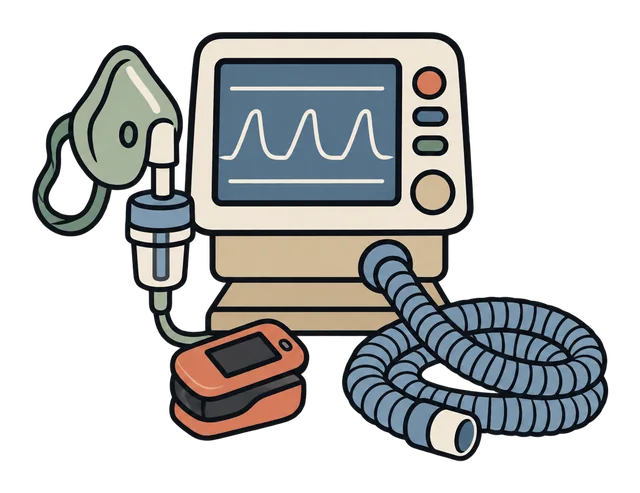
Check which automated or closed-loop modes your unit's ventilators offer and whether there is a protocol for using them.
This is not a probability of losing your job. It combines how much of the role's task load is exposed to automation with how far adoption has actually gone — useful for comparing occupations on one consistent basis, and for nothing else.
Written for respiratory therapists as the job exists in the US and Canada; in most of Europe and Asia the same work is split between intensive-care nurses, physiotherapists and lung-function staff, and those have their own pages where they exist. The evidence is a US labour projection, a Cochrane review and two European trials of automated ventilation, and a French trial of home-ventilation telemonitoring; in the trials the people at the bedside were mostly nurses, so the evidence establishes what automated ventilation does to the work, not how respiratory therapists' numbers or hours have changed.
The evidence base holds verified records for other occupations, but not one for this one yet. Until it does, the analysis below is reasoning about task structure and known technical capability — for this job in particular it is not backed by traceable sources, and we would rather say so than cite things we have not verified. An empty section here is a gap in our coverage, not a finding about the work.
What is actually changing#
The unit of analysis is the task, not the job title. A role is not replaced — its task mix shifts.
Each tile is one task. Its size is how much of the job it is; its colour is where the task is heading. Click a tile to see what the judgement does not establish.
Trials in European intensive care units where nurses were at the bedside; they do not measure how much of a respiratory therapist's shift this changes.
The absence of a record; it does not rule out devices that change how treatments are given.
Inferred from ventilation trials; no record measures how blood-gas or lung-function work is changing.
One small trial in one country, staffed by nurses; it does not show who does this work in the US.
Is this your job? Say so and this page narrows to your share of it.
A job title is a bundle of tasks bought together, and no two people hold the same bundle. Nothing is sent anywhere — it stays in this browser.
Read all 4 tasks in full — direction, reasoning and limits →
Recent changes#
United States. The statistics bureau projects employment of respiratory therapists to grow from 142,000 to 154,200 between 2025 and 2035, 9 percent, with about 8,600 openings a year. It says growth in the older adult population will lead to more respiratory conditions such as pneumonia and COPD and so to more demand for respiratory therapy. It does not mention AI or automated ventilation.
A named person with standing publicly predicted something, on a date, in an attributable statement. It is recorded so that who said what, and when, stays checkable — and it never moves a task's assessment, because a prediction is not an observation. Its value arrives later: the record sits on the same page as the evidence about that occupation, so anyone reading the forecast reads the record of what happened next beside it. That is the reckoning; this site publishes no verdict on whether a forecast came true.
Netherlands and Switzerland, seven intensive care units. 1,201 adults were analysed: the median ventilator-free days at day 28 were 16.7 with automated closed-loop ventilation and 16.3 with protocolised conventional ventilation, with no difference in mortality or duration of ventilation; ventilation quality was higher with closed-loop ventilation. Both groups followed standardised ventilation, sedation and weaning protocols. A trial of one system against a protocol run by staff.
A demo, benchmark or paper shows the task can be done. Updates what the technology can do — not what employers will do.
France, adults recently started on home non-invasive ventilation. In the telemonitoring group a CE-marked algorithm generated alerts from teletransmitted ventilator data and specialised nurses managed the alerts and gave therapeutic education. Of 53 patients analysed, the primary outcome, night-time transcutaneous carbon dioxide at six months, did not differ, but arterial carbon dioxide was lower with telemonitoring. An exploratory trial; the people acting on alerts were nurses.
Small-scale trial in a real setting. Tells us the deployment conditions are being tested, not that they hold — so one pilot is never enough on its own; two independent ones are.
Intensive care, many countries. The review pooled 62 randomised trials with 5052 participants comparing automated closed-loop ventilator systems with non-automated weaning, including protocolised weaning by staff. Automated systems probably reduce the duration of ventilation by 24 percent and the need for reintubation, with little to no difference in mortality; the evidence is of moderate certainty, downgraded for heterogeneity. It compares methods, not staffing.
A demo, benchmark or paper shows the task can be done. Updates what the technology can do — not what employers will do.
Netherlands, postoperative cardiac surgery. In a preplanned secondary analysis of a randomised trial of 220 patients, critical alarms per monitoring hour were similar with automated and conventional ventilation (5.6 vs 5.7), while the automated group needed fewer manual interventions per hour for ventilation control (0.7 vs 1.9), and nurses rated it more acceptable. The people at the bedside were intensive-care nurses, not respiratory therapists; it covers the first hours after surgery.
A demo, benchmark or paper shows the task can be done. Updates what the technology can do — not what employers will do.
What this means for you#
If you are starting out, expect ventilators that adjust themselves and remote data from patients at home. Build the judgement those systems leave to you: choosing modes and targets, reading what an alarm means, and the hands-on airway work.
Expect fewer manual setting changes and more time supervising automated modes and remote data. Deciding when to step in stays with you.
Your options#
Four directions, each with its real constraints and one thing you can test this week. Continuing as you are is a legitimate choice — it just has to be a chosen one.

Become the person who runs automated ventilation modes
Closed-loop modes are widely studied, and their results depend on the targets and limits a clinician sets.
Which modes your unit has depends on its ventilators, and not every mode is cleared in every country.
Check which automated or closed-loop modes your unit's ventilators offer and whether there is a protocol for using them.
Move into home ventilation and remote monitoring
Follow-up of home ventilation is moving to remote data and alerts that need someone to act on them.
Who may do remote follow-up, and how it is paid, depends on the country and the payer.
Find out whether a home-care company or clinic near you runs remote monitoring for home ventilators and who handles the alerts.

Stay in critical care at the bedside
Airway care, treatments and the decision to step in are done at the patient's side, and the US projects growth for the job.
Bedside critical care means shift work and physical strain.
List which of your tasks last week were hands-on and which were changing settings or answering alarms.
Common questions#
Not on present evidence. Automated ventilators take over part of the adjusting and probably shorten ventilation, but clinicians still set the targets, answer the alarms and do the hands-on airway work, and the US projects growth for the job.
We do not answer that with a number of years. Watch whether closed-loop modes become the default in your unit, and whether home ventilation follow-up moves to remote alerts. Those tell you more than any date.
The evidence is mixed. A 2025 Cochrane review of 62 trials found automated systems probably shorten ventilation and reduce reintubation, but the largest single trial found no gain in ventilator-free days compared with a protocol run by people.
The US labour statistics agency projects 9% growth from 2025 to 2035, driven by an ageing population, and does not mention AI. The work that changes most is adjusting ventilator settings; hands-on care does not.
What these judgements rest on#
0 of 4 task judgements on this page are backed by a verified event and 4 are platform inference, each labelled where it appears. Behind them sit 3 technology dimensions, a reconstructed trajectory since language models reached the public, and 5 verified events.
See which technologies, how it got here, and the method →
Where it sits in the official classification: skills, knowledge, related jobs →
Other roles in the same function#
A company divides its work into functions before it divides it into jobs. These sit in Core delivery (industry-specific) alongside this one — a fact about org charts, not a judgement that they are similar or that they are changing in the same direction.
Content moderator · Registered nurse · Radiologist · Pathologist · Radiographer / radiologic technologist · General practitioner / primary care doctor · Surgeon · Anaesthesiologist / anaesthetist · Optometrist · Care worker / nursing assistant · Counsellor / psychotherapist · Psychologist · Dietitian / nutritionist · Pharmacist · Pharmacy technician · School teacher · Driving instructor · University lecturer · Chef / cook · Electrician · Plumber · HVAC technician · Architect · Building inspector · Drafter / CAD technician · Interior designer · Civil / structural engineer · Land surveyor · Urban planner · GIS analyst / cartographer · Electrical engineer · Chip design engineer · Mechanical engineer · Industrial engineer · Quantity surveyor · Journalist · Editor and proofreader · Translator / Interpreter · Interpreter · Retail cashier / shop assistant · Bank teller · Medical assistant / clinic assistant · Waiter / restaurant server · Bartender / barista · Hairdresser / barber · Construction worker · Bricklayer / blocklayer · Carpenter / joiner · Auto mechanic / vehicle technician · Medical laboratory technician · Physiotherapist / rehabilitation therapist · Massage therapist · Firefighter · Paramedic / EMT · Police officer · Emergency dispatcher · Farmer · Gardener / landscaper · Social worker · Dentist · Dental hygienist · Veterinarian · Librarian · Welder · Machinist / CNC machinist · Sonographer