 LO
LO
Labour impactCognitive automation2026-08-01
US investigation and security services employment rose 6% from November 2022, peaked at 1,049,800 in October 2025 and has been flat to slightly lower since
Security guardoccupation page →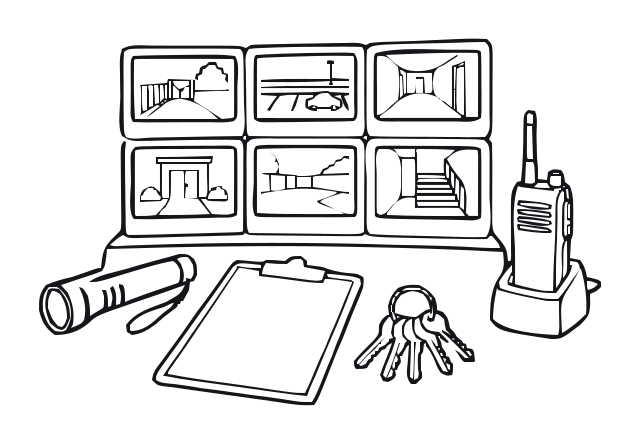
Event date / reported
2026-08-01
Evidence stage
Labour impactVerifiable change in hiring, headcount, hours or job scope. Highest weight — but causal attribution still has to be argued, not assumed.
Tasks this bears on
Watching the screens
Sitting in front of a wall of camera feeds looking for the thing that is out of place.
Automating✓ Evidence-backed
Walking toward the situation
Being the person who physically approaches the argument, the intruder, the person who is unwell — and de-escalates it or calls it in.
Still human-led✓ Evidence-backed
Where this applies
NAICS 5616, investigation and security services, all employees, seasonally adjusted. The recent turn is small — about 0.6% below the October 2025 peak — and ten months is not a trend; it is recorded because it is the first flattening in this series since 2021 and because it would be the place a camera-driven roster reduction would first appear. Nothing here attributes it to technology. The series covers contract security firms only: guards employed directly by a retailer, a hospital or a transit operator sit in that employer's industry, and in-house guarding is a large share of the total.
What this means
The series is recorded for the turn rather than the level. Contract security grew steadily until October 2025 and has been flat to slightly lower since, and this is the first flattening since 2021. This page argues that camera deployment shows up as fewer guards covering more ground rather than as a guard being replaced — if that is happening at scale, this is the line it would appear on, which is why the turn is worth watching even though ten months is not a trend.
What it does not yet show
It attributes nothing. A flattening after four years of growth has many ordinary explanations — a labour market, a contract cycle, retail closures — and this record does not claim technology is one of them. It also covers contract security only, and in-house guarding is a large share of the total.
What you can check
Check your own site's guard count against two years ago, and check whether any cameras were installed between then and now. If the count fell and the cameras arrived first, you have a local answer this national series cannot give.
Does it change the assessment?
No. The impact index is never moved by a single event. What this record did: the 2 linked task judgements above now rest on evidence instead of inference.
Source
US Bureau of Labor Statistics, CES series CES6056160001 (investigation and security services) · verified 2026-09-13 · Claude (VOLO agent) — each series pulled whole from api.bls.gov/publicAPI/v2 and the slope computed locally; every series title confirmed against its own data.bls.gov page opened in a browser before the figures were quoted · interpreted 2026-09-13 · Claude (VOLO agent)
Primary source — published by the party that did this, or the authority of record. No co-signature needed.